

Towing is one of those service businesses where demand never really goes away. Cars break down, accidents happen, and parking rules get enforced around the clock. Compared to many other transportation businesses, the barrier to entry is relatively manageable — especially if you start with one truck and a focused service model.
But “manageable” doesn’t mean easy. The operators who build something sustainable usually get the foundation right before they ever hook up their first car. This guide walks through the key decisions involved: picking your service model, understanding startup costs, choosing the right equipment, and sorting out the legal side of the business.
Pick Your Service Model Before Anything Else
This is the most important decision you’ll make early on, and it affects everything that comes after — your truck type, your insurance, your pricing, and even which licenses you need.
The main service types in towing include:
- Local light-duty towing — everyday breakdowns and accident recovery
- Flatbed towing — better suited for damaged vehicles, low-clearance cars, or higher-value loads
- Private property impound — towing unauthorized vehicles from commercial or residential properties
- Roadside assistance — jump-starts, tire changes, lockouts, fuel delivery
- Repossession towing — working with lenders to recover vehicles on delinquent loans
- Long-distance towing — hauling vehicles across significant distances, sometimes across state lines
Each of these has a different customer base, a different revenue structure, and different operational demands. Repossession work, for example, involves legal paperwork and working with financial institutions. Long-distance towing may require federal operating authority that a purely local business doesn’t need.
Most new owners are better off picking one or two focused services rather than trying to cover everything at once. A common and practical entry path: start with one used truck, focus on local retail towing and roadside assistance, build cash flow, then expand into contracts or additional services from a more stable position.
What It Actually Costs to Get Started
Startup costs vary quite a bit depending on your location, the type of truck you buy, and the services you plan to offer. One estimate from current operator guidance puts the range at roughly $75,000 to $130,000 to get a tow truck business off the ground — but treat that as a directional range, not a fixed number.
The major cost categories to plan for include:
- Truck purchase — the largest single expense for most startups
- Insurance — typically one of the highest ongoing costs in this industry
- Licenses and permits — vary by state, municipality, and truck type
- Fuel reserves — you’ll burn fuel before the revenue catches up
- Tools and equipment — chains, straps, safety gear, and recovery tools
- Communications — a dispatch phone setup and GPS tracking
- Marketing — website, Google Business profile, and early advertising
- Operating cash buffer — to cover gaps while you build volume
A used truck is widely recommended as the smart move at startup. It reduces upfront cost without sacrificing the ability to do the work. That said, condition and mileage matter — a cheap truck that spends two weeks a month in the shop will cost you more in downtime than you saved on the purchase price.
One thing new owners sometimes underestimate: even after launch, ongoing expenses eat into revenue faster than expected. Fuel, repairs, insurance premiums, and marketing don’t stop. Reserve cash gives you room to stay operational while you build consistent call volume.
If you’re considering a metro area versus a smaller market, keep in mind that higher population density usually means more call volume — but also more competition and higher operating costs. Neither setting is automatically better; it depends on your local knowledge and competitive landscape.
The Right Truck for the Work You Plan to Do
The truck decision should follow your service model, not the other way around. Once you know what kind of work you’re pursuing, the right equipment becomes clearer.
Wheel-Lift Trucks
Wheel-lift trucks are generally the lower-cost entry option. They’re well suited for standard local towing jobs — moving vehicles that are driveable or have straightforward damage. If you’re starting lean and targeting basic retail towing calls, a wheel-lift can get the job done at a lower price point.
Flatbed Trucks
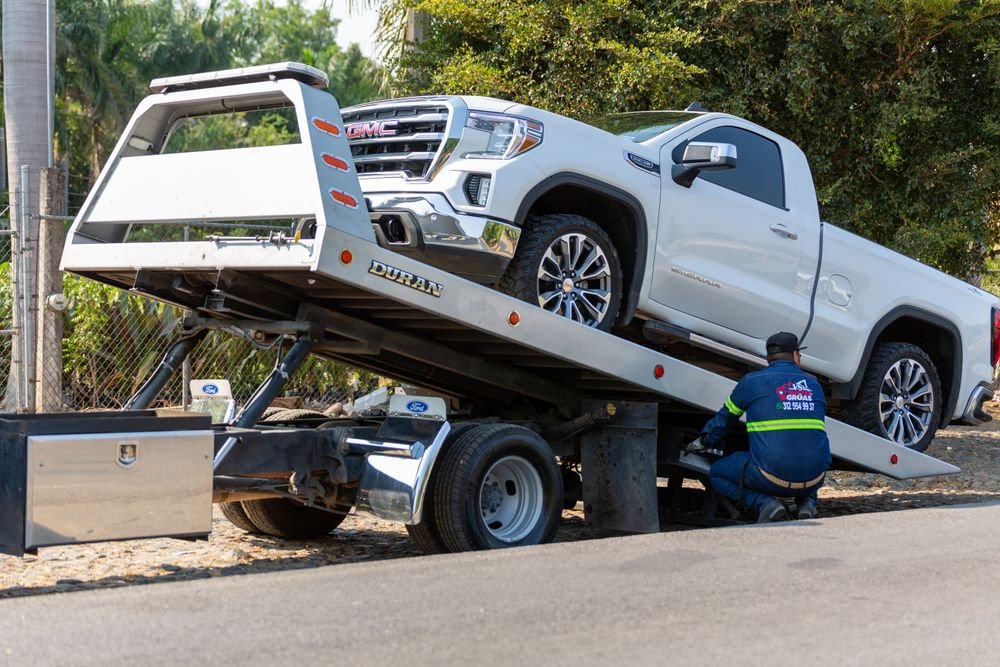
Flatbeds offer more flexibility. They’re better for damaged vehicles that can’t be towed on their wheels, low-clearance cars, motorcycles, and higher-value vehicles where the owner wants their car handled carefully. If you’re targeting a more versatile range of jobs, a flatbed is worth the higher cost.
Whichever type you choose, buy used if your budget is tight — just vet it carefully. Get a mechanic to inspect the truck before you commit. And if you’re thinking about expanding to a fleet later, factor in where you’ll store and service multiple vehicles. That decision is easier to account for early than to retrofit later.
Licenses, Permits, and Business Registration
The legal setup for a towing business involves several layers, and requirements vary meaningfully by state and municipality. There’s no single checklist that applies everywhere, so the details below should be used as a starting framework — not a substitute for checking your specific local rules.
Standard Business Formation
Most towing businesses start by registering a legal business entity — often an LLC — and obtaining a federal Employer Identification Number (EIN) from the IRS. You’ll also need a general business license from your city or county, and your state may have its own registration requirements on top of that.
Towing-Specific Permits
Many states and municipalities require permits specifically for towing operations. Some require a towing-specific license or certification to operate legally. A few jurisdictions have rules around how towing companies can respond to accidents or what signage and equipment their trucks must carry. Check with your state’s Department of Transportation and your local government offices to get the specifics for your area.
Federal Registration
Whether your business needs a USDOT number or operating authority (MC number) depends on several factors — including truck weight and whether you operate across state lines. Not every tow truck business needs the same federal registrations. A local operation running lighter trucks within one state may have different requirements than a company doing interstate long-distance towing. The Federal Motor Carrier Safety Administration (FMCSA) website is the right starting point for understanding where your business falls.
Write a Business Plan Early
A business plan isn’t just for investors. It helps you think through the market opportunity, define your service model, and clarify your cost structure before you spend anything. If you’re applying for a loan or equipment financing, a lender will likely want to see one.
A solid towing business plan should cover:
- Executive summary
- Company description and service model
- Market analysis — who your customers are and who you’re competing against
- Organization and management structure
- Financial plan — startup costs, revenue projections, and cash flow
- Marketing strategy — how you’ll get calls in the door
Even a straightforward one-truck operation benefits from going through this exercise. It forces you to stress-test your assumptions before they cost you money.
Insurance, Pricing, and Finding Early Customers
Insurance
Towing businesses typically need more than basic commercial auto insurance. Depending on your services, you may also need on-hook towing coverage (for damage to vehicles being towed), cargo coverage, garage keepers insurance if you store vehicles on-site, and general liability. Talk to an insurance broker who works with commercial trucking or transportation businesses — they’ll be better positioned to build the right coverage package than a general agent.
Pricing Your Services
A common pricing structure is a base hookup fee plus a per-mile charge, with additional fees for after-hours calls, extra labor, or specialized recoveries. Local tows are often quoted as a flat minimum plus mileage. Longer-haul jobs typically use a higher base fee and a per-mile rate. Research what competitors in your area are charging before you set your prices — you want to be competitive without undercutting your own margins.
Getting Your First Customers
Early revenue usually comes from a combination of channels. A Google Business profile and a basic website with local SEO are worth setting up before you launch. Google Ads can drive calls quickly in competitive markets, though it costs money. Building relationships with local auto repair shops, car dealerships, and fleet managers can generate steady referral volume over time. Some operators also pursue contracts with roadside assistance networks or motor clubs, which provide consistent call volume in exchange for lower per-job rates.
If you want to go deeper on building a business from the ground up, Learn Business Daily covers a wide range of practical topics across different industries and business models.
Final Thoughts
Starting a tow truck business isn’t complicated in theory — but the details matter. The operators who build something durable tend to do a few things consistently: they pick a focused service model before buying equipment, they build in enough cash reserve to survive the early months, and they treat the legal and insurance setup seriously rather than as an afterthought.
Read Also:
- How To Start An Electrical Business
- How To Start a Hair Business
- How To Start A Self Storage Business in 2026