

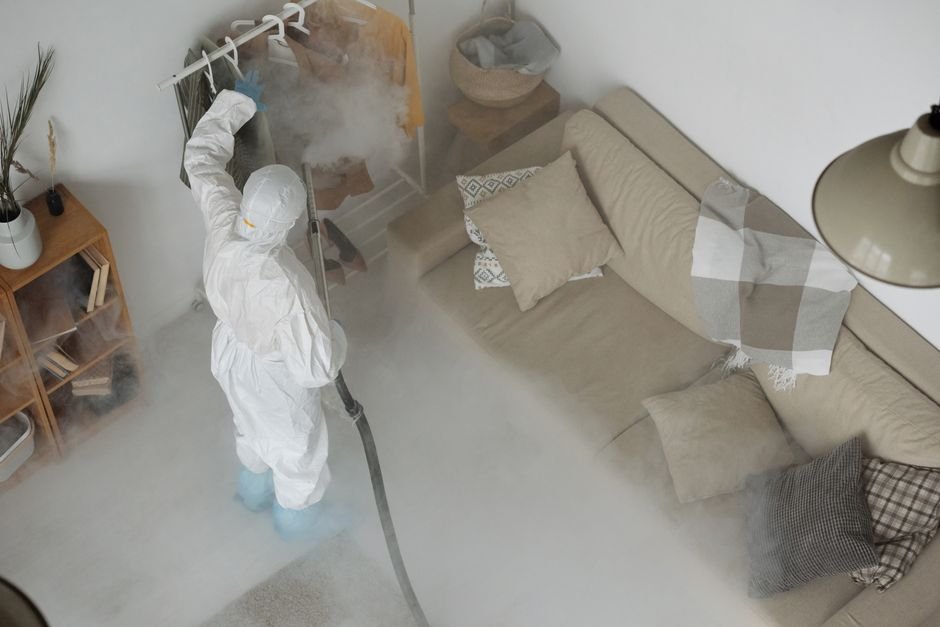
Pest control is one of those local service businesses where the phone keeps ringing year after year. Customers don’t just call once — many sign up for ongoing service plans, which means you’re building predictable, recurring revenue instead of chasing one-off jobs. That model is genuinely attractive. But getting started takes more preparation than most people expect, especially on the licensing side.
This article covers what you actually need to know: how the business works, what licenses are required, what it costs to get started, which services to offer first, and how to price your work.
Why Pest Control Works as a Small Business
Before investing time or money, it helps to understand how the business model actually works. Pest control isn’t primarily a “call us when something’s wrong” business — the real income comes from maintenance contracts. Think monthly or quarterly service agreements where you treat the same properties on a regular schedule.
One-time emergency treatments are part of the job, but they shouldn’t be your core revenue plan. The operators who build stable businesses focus on growing a recurring client base.
To make that concrete: a solo operator with 100 residential accounts at $55 per month brings in $5,500 in recurring revenue every month. That’s before any upsells or one-time jobs. It’s a realistic early-stage benchmark worth keeping in mind.
Both residential and commercial clients are available. Commercial accounts — restaurants, property managers, office buildings — tend to have lower churn than residential ones. Once you land them, they usually stay.
Licenses, Certifications, and State Requirements You Can’t Skip
This is where a lot of new entrants underestimate the work involved. Pest control is regulated at the state level, and requirements vary significantly from state to state. There’s no single national license.
In most states, you’ll need to get pesticide certified before you can apply for a pest control business license. That typically means passing a written exam, sometimes multiple exams depending on the services you want to offer.
A Few State Examples
In Tennessee, each licensing exam costs around $150 per category. You’ll also need liability insurance with minimums of at least $250,000 per occurrence and $500,000 aggregate, plus a surety bond and a charter from the Tennessee Department of Agriculture.
In California, you need a licensed Qualifying Manager — someone who holds an Operator license — before your company can register with the Structural Pest Control Board. You’ll also need a $12,500 surety bond, proof of workers’ compensation insurance or a filed exemption, and background checks for unlicensed owners and officers.
Florida requires that your business license be issued before you perform any pest control services at all. Licensing fees include a base rate plus an additional charge per employee, so your costs go up as you hire.
In Texas, a business license is required from the Structural Pest Control Service for each business location — including branch offices.
These examples show how different the requirements can be. Your best starting point is your state’s department of agriculture or structural pest control board website. Also check whether your city or county requires additional local licenses.
What It Actually Costs to Get Started
A professionally equipped, fully compliant pest control startup typically costs somewhere between $20,000 and $35,000. That range covers licensing fees, liability insurance, a used service vehicle, core equipment, and some initial marketing.
Breaking it down further:
- State licensing fees: Generally $200–$800 depending on the state and categories you’re applying for
- Liability insurance: Roughly $1,200–$3,000 per year
- Vehicle: A used, reliable truck or van is the largest single expense for most startups
- Equipment: Sprayers, bait guns, safety gear, and basic hand tools
- Vehicle branding and shelving: Worth budgeting for early — it signals professionalism and helps with marketing
Some practitioners do talk about starting with under $1,000 in equipment. That’s possible if you’re doing basic services with a backpack sprayer, a hand sprayer, a bait gun, and standard PPE like gloves, a respirator, and coveralls — using your personal vehicle with proper chemical storage.
But that lean approach has real limits. It doesn’t cover licensing or insurance, and it restricts what services you can legally offer. Think of it as a proof-of-concept phase, not a complete business launch.
One more thing worth noting: forming an LLC is a common recommendation for this type of business. Chemical-related liability claims are a real risk, and separating your personal assets from the business makes sense from day one.
Which Services to Offer First and How to Price Them
Starting simple is the right move. Focus on high-demand, lower-complexity services: ants, cockroaches, rodents, and general exterior perimeter treatments. These cover the majority of residential calls and are manageable while you’re building your route.
Termite inspections and wood-destroying organism reports require additional licensing in most states. They’re worth adding later once you’re established, but they’re not the right starting point.
Eco-friendly and low-toxicity service options are growing in demand, especially in urban and suburban markets. They can also be a useful differentiator if the local competition is sticking with conventional methods.
Setting Your Prices
Pricing in pest control usually follows a recurring-service structure. A 2,000 square foot home might be priced around $45 per month for quarterly service, or around $65 per month for monthly visits. These aren’t fixed numbers — they vary by region and market — but they give you a useful frame.
For one-time treatments, a common approach is to price them at three to four times your monthly rate. If your monthly plan is $50, a one-time visit might be priced at $175–$200. This naturally encourages customers to sign up for a recurring plan instead.
Underpricing is one of the most common mistakes new operators make. It’s tempting to go low to win early customers, but it’s hard to raise prices later, and thin margins leave you with no room to handle problems.
Getting Your First Customers and Standing Out
The established pest control companies in most local markets have recognizable names and years of reviews behind them. Competing on brand alone doesn’t work. What tends to work better is competing on service quality and responsiveness.
Slow callbacks, poor communication, and inflexible scheduling are common complaints about larger companies. If you respond quickly, show up on time, and explain what you’re doing clearly, that alone sets you apart for many customers.
For marketing, direct mail and digital advertising are the two main channels for new operators. Customer acquisition cost benchmarks generally fall between $150 and $300 per new customer depending on the method. Local SEO — getting your Google Business profile set up properly and collecting reviews — is low-cost and pays off over time.
Commercial accounts like restaurants and property managers are worth pursuing early. They tend to sign longer contracts and refer other businesses when you do good work.
Operations, Software, and When to Hire
When you’re running 20 or 30 accounts, you can probably manage scheduling and invoicing manually. Once you get past that, things start slipping. Field service software — tools like Jobber or Housecall Pro — helps you automate appointment reminders, track invoices, and manage your route efficiently.
It’s worth setting this up earlier than you think you need to. Building good habits around scheduling and client communication from the start saves a lot of headaches later.
On hiring: when you’re ready to add technicians, check your state’s requirements. Some states — Florida, for example — charge a per-employee fee as part of your business license, so employee count affects your licensing costs directly. In California, unlicensed employees working under your license have their own registration requirements. Workers’ compensation becomes mandatory in most states once you have employees.
If you’re looking for additional guidance on building and running small service businesses, Learn Business Daily covers a range of practical topics for independent operators and small business owners.
A Note on Experience and Safety
Pesticides are regulated substances. Labels are legal documents — applying a chemical in a way that contradicts its label is a violation, not just a mistake. Understanding what you’re using, how it works, and how to apply it safely is a non-negotiable part of this business.
Many experienced pest control operators recommend working under an established company first, even for six months to a year. You’ll learn which treatments work for which pests, how to read a property, and how to handle situations that don’t go as planned. That experience is hard to replace with reading alone.
Integrated pest management — using the least-invasive methods that get results — is both the professional standard and increasingly what customers expect. Building your practice around IPM from the start puts you on the right side of both regulation and client expectations.
The Bottom Line
Pest control is a legitimate, durable business with real demand and a revenue model that rewards consistency. But it’s not something you can start casually. Licensing requirements are real, safety obligations matter, and the operators who succeed are the ones who treat both seriously from day one.
Start with the licensing process in your specific state. Get properly insured. Build a small recurring client base before trying to scale. And invest in learning the craft — the technical knowledge is what separates good operators from those who don’t last.
Read Also:
- How To Start A House Cleaning Business
- How To Start A Sticker Business From Scratch
- How To Start A Hvac Business