

Maria Callas is one of the most documented opera singers of the twentieth century. Biographies, documentaries, and films have covered her career in detail. Yet her older sister, Yakinthi, remains largely unknown outside of family histories and biographical footnotes.
Interest in Yakinthi has grown recently, partly because of the 2024 film Maria, which brought her into wider public view. This article covers who Yakinthi Callas was, her place in the family, what is known about her relationship with Maria, and why her story matters beyond the shadow of her famous sister.
The Callas Family and Where Yakinthi Fits In
Yakinthi Callas, commonly known as Jackie, was Maria Callas’s older sister. According to available biographical sources and genealogy records, she was born in 1917. Her parents were George Kalogeropoulos and Evangelia Dimitriadou, known as Litsa.
The family also had a third child, a son named Vassilis, who died young according to biographical accounts. That left Yakinthi and Maria as the two surviving siblings.
The name “Callas” itself is a simplified form of the original family surname, Kalogeropoulos. George adapted the name over time, and it eventually became the name associated with Maria’s international opera career. In records about this family, you will find several spelling variations, so the names Callas, Kalogeropoulos, Yakinthi, and Jackie all refer to the same immediate family circle.
“Yakinthi” and “Jackie” refer to the same person. The shorter name appears consistently across secondary sources and was the name she used publicly in later years.
From Greece to New York — The Family’s Early Years
Yakinthi was born in Greece. In 1923, the family moved to New York, settling in Astoria, Queens, an area with a well-established Greek immigrant community. Maria was born later that same year in New York, making Yakinthi six years older than her famous sister.
Growing up in New York, the two sisters shared a household shaped by immigrant life, financial pressure, and the strong presence of their mother, Litsa. Litsa had clear ambitions for her daughters, and those ambitions played a significant role in how both sisters’ lives developed.
It is worth keeping in mind that these early years were shared years. The Callas family story before Maria became famous was simply the story of a Greek immigrant family navigating life in a new country. Yakinthi was a part of that story in her own right, not just as a footnote to her sister’s later career.
The Return to Greece and the Sisters’ Teenage Years
In 1937, Litsa separated from George and returned to Athens with both daughters. Maria was 13 at the time. Yakinthi, being six years older, was already in her late teens.
This move turned out to be a defining moment for Maria. Athens was where her formal operatic training began, and the Greek cultural environment shaped the direction of her voice and career. For Yakinthi, the move meant settling into adult life in a city that was about to face the pressures of the Second World War.
The sisters spent their formative years in Athens together during a difficult period in Greek history. Some biographical accounts describe Yakinthi as socially confident and as someone their mother seemed to favor. These descriptions come from Maria’s own recollections and from biographers interpreting the family dynamic, so they should be understood as one perspective rather than a settled fact.
What is clear is that both sisters navigated a complicated household in a complicated time, and their shared experience in Athens formed the backdrop for whatever relationship they would carry into adulthood.
How the Sisters’ Relationship Changed Over Time
As Maria’s international career grew through the late 1940s and 1950s, the two sisters became distant. This was not a dramatic public falling-out. It was more the quiet separation that can happen when one sibling’s life moves in a very different direction from the other’s.
Yakinthi reportedly said that she and Maria renewed contact in 1963, after a long period of limited communication. This suggests the distance between them was real but not absolute, and that they were not permanently estranged. Available accounts describe their later contact as limited but present in the years before Maria’s death in 1977.
A book titled Sisters is attributed to Yakinthi “Jackie” Callas in secondary sources and is sometimes cited as her personal account of the family’s history and her relationship with Maria. Secondary references suggest it was published around 1990. However, publication details should be treated as secondary-source material, since primary verification of this title has not been independently confirmed in the research available.
Some sources also mention that Yakinthi received a portion of Maria’s estate following her death. This claim appears in secondary accounts, but the exact details of the estate distribution are not confirmed by primary legal records, so it is best treated as an unverified claim rather than established fact.
What Yakinthi’s Life Looked Like Outside Maria’s Fame
Yakinthi did not become a public figure in her own right. She was not a performer, and she did not pursue a public career. Most of what is known about her comes from biographical accounts of Maria’s life, where Yakinthi appears as a family member rather than as an independent subject.
This is a common situation for siblings of famous people. Their lives are real and full, but they are documented mainly through their connection to someone more publicly visible. In Yakinthi’s case, her value to readers and researchers is as a window into Maria’s early family life — what the household was like, what the mother-daughter dynamics looked like, and how Maria’s path to fame began in a family that was, by most accounts, complicated.
Yakinthi’s date of death is uncertain. Different secondary sources place it in 1996 or 2004, and genealogy-style databases sometimes conflict with each other on this point. Given those inconsistencies, it is not possible to state a confirmed death year with confidence.
If you are interested in the lives of people connected to cultural figures like Maria Callas, Learn Business Daily covers a range of profile and background topics that offer this kind of grounded, factual perspective.
Yakinthi in the 2024 Film Maria
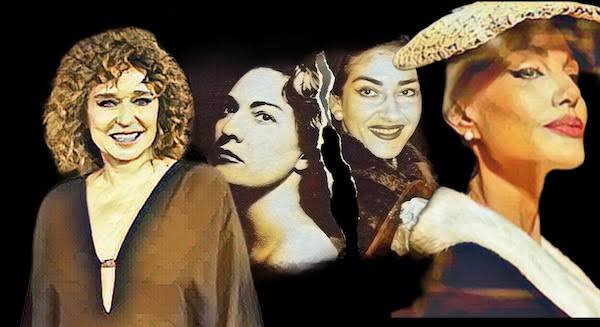
Public curiosity about Yakinthi increased noticeably after the release of the 2024 film Maria, a biographical drama about Maria Callas. In the film, actress Valeria Golino portrays the adult Yakinthi, while Erofili Panagiotarea plays the younger version of the character.
The film brought Yakinthi’s name into conversations that would not have otherwise included her. Many viewers watching Maria encountered the name Yakinthi for the first time and went looking for information about who she actually was.
It is important to remember that the film is a dramatization. Scenes, dialogue, and emotional dynamics in a biographical film are shaped by artistic choices, not just historical record. The film can be a useful starting point for curiosity, but it should not be treated as a documentary source for understanding the real Yakinthi’s life or her relationship with Maria.
Why Yakinthi’s Story Is Worth Knowing
Yakinthi Callas is not a celebrity. She did not have an international career or a public profile that would make her independently famous. But she was a real person whose life intersected with one of the most discussed artistic careers of the twentieth century.
Understanding who Yakinthi was helps fill out the picture of where Maria Callas came from. It shows that Maria’s rise was not a simple story of isolated talent. It grew out of a family — an immigrant family with strong personalities, difficult dynamics, and a complicated bond between two sisters who came of age together in Athens during wartime.
Yakinthi’s life is simply less publicly documented than her sister’s. That does not make it less real or less meaningful. It just means that what we know about her is limited, and those limits should be respected rather than filled in with speculation.
For anyone curious about Maria Callas, learning about Yakinthi adds a layer of human context that biographies of a single star can sometimes miss. The two sisters shared a beginning, and that beginning shaped both of them in ways that are still worth understanding.
Read Also: