

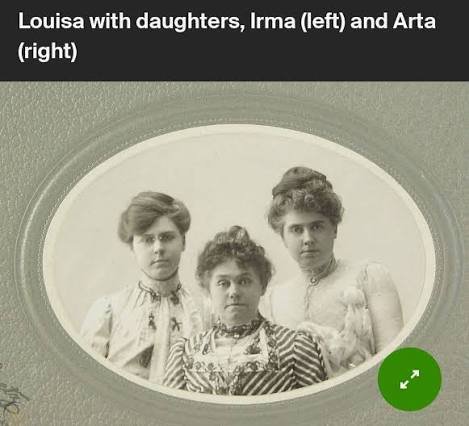
The name Irma Louisa Cody Garlow tends to surface in genealogy searches and online family trees, often paired with questions about a possible connection to a well-known historical figure. But despite the curiosity the name generates, reliable public documentation about her is limited.
This article looks at what her name structure tells us, what the Cody and Garlow surnames suggest about her background, how to search for her responsibly, and what the famous Cody family connection may — or may not — involve.
Who Irma Louisa Cody Garlow Was
Irma Louisa Cody Garlow does not appear in any widely indexed public biography under that exact name. She shows up primarily in genealogy databases and user-submitted family trees, which places her firmly in the category of a historical private individual rather than a public figure in her own right.
Her full name gives us some useful clues on its own. “Cody” reads most naturally as a birth or family surname, while “Garlow” appears to be a married surname. That pattern — carrying both names in records — is common for women in American genealogy from the late 19th and early 20th centuries.
Because no confirmed original record has been independently indexed under this exact name, anything said about her birth date, birthplace, or family role should be treated as a research lead, not a settled fact. Genealogy records suggest certain details, but suggestion is not the same as confirmation.
What Her Name Variants Tell Us
One of the first challenges when searching for Irma Louisa Cody Garlow is that genealogy records rarely use a consistent format. The same person can appear under several different name forms depending on the document type.
You might see her listed as:
- Irma L. Cody — in an early census or school record
- Irma Cody Garlow — in a marriage or death record
- Irma Louisa Garlow — in a later census after marriage
- Irma Garlow — in an obituary or community notice
A middle name like “Louisa” is easy to miss. Census takers often abbreviated it, dropped it entirely, or spelled it differently. That alone can scatter search results across multiple unrelated entries.
The combination of “Cody” and “Garlow” in one listed name is a strong signal that you are looking at a birth-to-marriage surname transition. But it is worth being careful here. Before combining results from different searches, verify that the ages, locations, and household members match across at least two separate records. Merging the wrong Irma Cody with the wrong Irma Garlow is a common genealogy mistake.
The Cody Family Name and Its Historical Context
The Cody surname has a well-documented place in American history. The most prominent bearer of the name was William Frederick “Buffalo Bill” Cody, the frontier scout, marksman, and entertainment showman who became one of the most recognizable figures of the American West in the late 1800s.
Buffalo Bill Cody founded the famous Wild West show, which toured across the United States and Europe for decades. He was a genuinely famous person during his lifetime, not simply a legend built up afterward. That fame naturally makes the Cody surname interesting to genealogists and history enthusiasts.
When the name “Irma Louisa Cody Garlow” appears in genealogy searches, many readers are asking whether she had a direct family connection to Buffalo Bill. That is a fair question. However, sharing a surname does not automatically establish a family relationship. The Cody name appears across many unrelated American family lines.
If a verifiable record — such as a census, birth certificate, or probate document — directly links Irma to the Cody family line, that connection becomes genuinely relevant. Without that record, the relationship remains an open question.
It is worth noting that Buffalo Bill Cody did have children and grandchildren who carried variations of the Cody name or married into other families. One of his daughters was named Irma Cody, and she later married. Family trees sometimes extend from that line into subsequent generations. Whether “Irma Louisa Cody Garlow” fits into that lineage is something that original records would need to confirm directly.
How to Verify Her Identity Through Historical Records
If you are trying to pin down who Irma Louisa Cody Garlow actually was, there is a straightforward path to take. The key is to work with original or near-original documents rather than relying on user-submitted family trees alone.
Start with U.S. Census Records
Census records are one of the most reliable starting points for any American genealogy search. They list age, residence, household members, and birthplace for each person enumerated. The National Archives (archives.gov) holds these records and makes many of them accessible through its digitization partners.
Search for Irma under each name variant and compare results. If you find an Irma Cody in one census decade and an Irma Garlow in a later one, check whether the age, birthplace, and state of residence are consistent before concluding they are the same person.
Look for a Marriage Record
A marriage certificate is the most direct way to confirm that “Cody” was her birth surname and “Garlow” was a married one. Marriage records typically list the bride’s full name, her parents’ names, and sometimes her place of birth. That information, when compared against other documents, can establish her family line with reasonable confidence.
Check Obituaries and Memorial Records
Find a Grave (findagrave.com) and Chronicling America (chroniclingamerica.loc.gov) are both useful for obituaries and memorial notices. Obituaries often name surviving relatives, which can help confirm or rule out a connection to a notable family. Keep in mind that Find a Grave memorials are user-submitted and should be cross-checked against the actual gravestone inscription or a published obituary.
Use FamilySearch for Regional Guidance
FamilySearch (familysearch.org) offers a research wiki that explains how to find civil registrations and church records by region and time period. If Irma was born or married in a specific state, the FamilySearch wiki can point you to the right record collections for that area.
Compare at Least Two Independent Sources
This is the most important rule in genealogy research. A single user-submitted family tree entry is a research lead — it tells you where to look, not what is true. Only when two independent original records agree on the same person, date, location, and relationship can you feel confident drawing a conclusion.
Resources like the Internet Archive (archive.org) may also have digitized local histories, county biographies, or out-of-copyright genealogical publications that could mention the Cody or Garlow families in a regional context. Those kinds of sources often fill in details that federal records miss.
For anyone building out research on historical American families, Learn Business Daily also covers topics around public figures, family histories, and notable names worth following.
What Remains Open and Why That Matters
At this point, no widely available public source has definitively established Irma Louisa Cody Garlow’s full biography, confirmed family relationships, or documented celebrity connection. That does not mean she did not exist or that the connection to the Cody family is false. It simply means the available digitized records have not yet produced a clear, independently verified answer.
Genealogy research is often incremental. A census record found today might lead to a marriage certificate tomorrow, which then points to an obituary that names her parents. That chain of evidence builds a reliable picture over time.
What matters most is being honest about what is confirmed versus what is still a working hypothesis. Using phrases like “genealogy records suggest” or “a family tree entry identifies her as” keeps the research accurate without dismissing leads that may eventually be verified.
A Responsible Starting Point
Irma Louisa Cody Garlow is most accurately described as a historical private individual whose name appears in genealogy contexts, likely connected to the broader Cody family line through birth and to the Garlow family through marriage. The possibility of a connection to Buffalo Bill Cody’s family is one that many researchers find worth pursuing, and that curiosity is understandable given the historical weight of the Cody name.
But the work of confirming that connection belongs in the archives — in census pages, marriage ledgers, church registers, and court records — rather than in unsourced claims repeated across family tree websites.
Start with the name variants. Pull at least two independent original records. Compare ages, locations, and household members carefully. That methodical approach is the only way to turn a genealogy lead into a documented family history.
Read Also: